AI & Product Design

I design products with AI.
Sometimes the right decision is not to use it.

I'm a product designer who uses AI as both a product capability and a build partner. These experiments are me working out where AI actually improves a workflow. Sometimes it does. Sometimes a deterministic system is the better answer, sometimes a human has to stay in the loop, and sometimes AI has no business being there at all.

12 Product Experiments
Production + Prototypes
AI + Deterministic Systems
Human-in-the-Loop Design

How I decide where AI belongs

The question I ask isn't "Can AI do this?" It's "Should AI be responsible for this?" Here are the five principles that guide my design decisions.

Subjective generation

Scenarios where creating draft text or assets accelerates the user's workflow but has subjective standards.

Design Decision

AI can generate. Humans stay accountable. Keep the AI on drafts only. The user reads it, edits it, and owns it before it goes out.

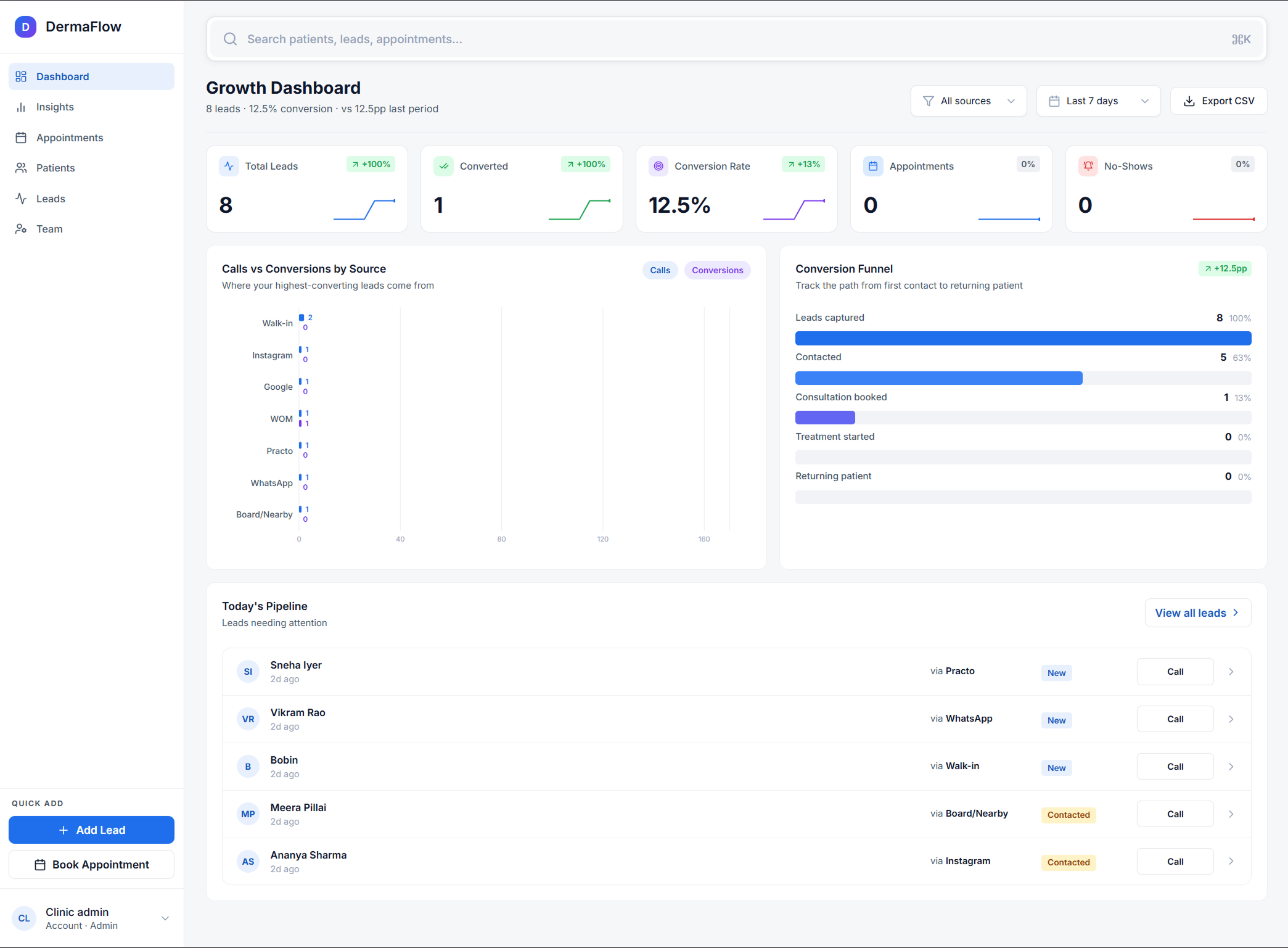
Example: DermaFlow uses AI to draft replies, but staff review before anything is sent.

Explainable decision

Anywhere the output has to be mathematically right, compliant, or explainable to the person reading it.

Design Decision

Deterministic problems deserve deterministic systems. Use a rule-based engine for the calculation. Don't ask a language model to guess at arithmetic.

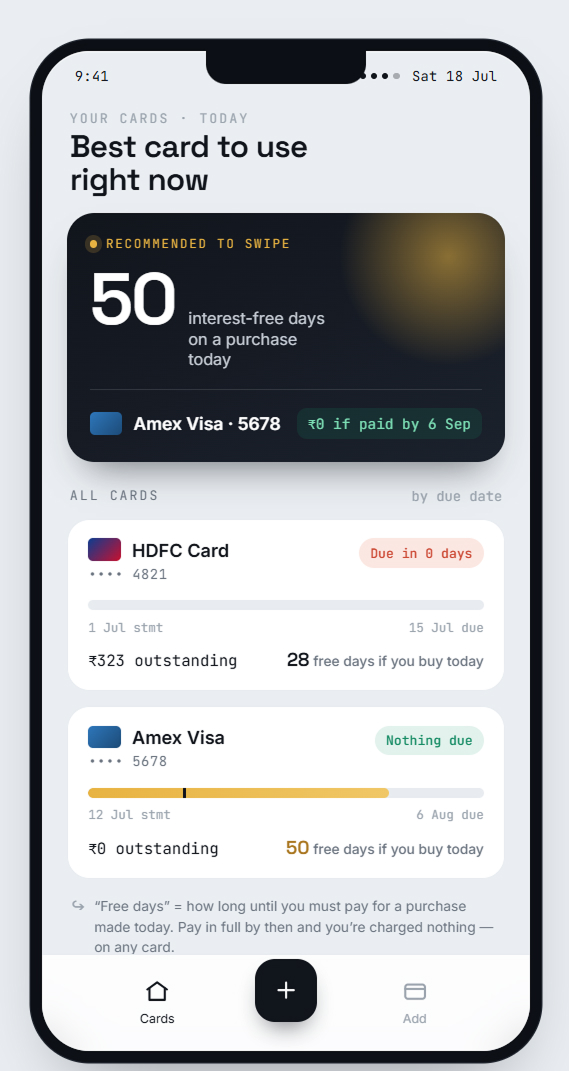
Example: Float uses OCR to assist input, but billing-cycle calculations use deterministic logic rather than an LLM.

High-consequence output

Workflows where mistakes or hallucinations carry material operational, financial, or safety consequences.

Design Decision

High-consequence outputs need review. Let the AI search and index, and make it show its evidence. A person still makes the call. No automated verdicts.

Example: CompliAI maps evidence to controls, but findings are presented for human review rather than treated as automated compliance verdicts.

Sensitive personal data

Products handling highly personal user information, children's content, or secure compliance records.

Design Decision

Privacy can change the architecture. Keep the generation pipeline anonymous and the history on the device. The server should learn as little as possible.

Example: Bedtime Stories keeps story history on the device rather than storing children's personal content on a server.

No meaningful AI value

Core user needs that center on direct human connection, community presence, or simple utility.

Design Decision

Sometimes AI adds no value. Leave AI out on purpose. Simple mechanics are worth more here than anything generated.

Example: PrayTogether deliberately contains no AI-generated product experience because AI does not meaningfully improve the core user need.

AI isn't one decision

Across these products, I used AI in different roles depending on the problem, risk and need for explainability.

Project AI Role Human Role Deterministic Layer Why
DermaFlow AI drafts replies Staff approve CRM workflow and permissions Medical-context communication needs accountability
CompliAI AI maps documents to controls Human reviews findings Workflow and evidence management Compliance claims need scrutiny
Float OCR assists card input User confirms scan Billing-cycle calculation Math should not depend on language-model output
Bedtime Stories AI generates stories Parent controls parameters Privacy and storage architecture Personalisation without retaining history
Lead Engine AI used as build partner User evaluates prospects Transparent weighted scoring Sales decisions need explainable scores
PrayTogether No product AI Community participates Scheduling and realtime infrastructure Generated content does not improve the core job

More experiments archive

Seven more, built the same way, with AI as the development partner.

Showing 7 of 7 projects

DS Governance, Interactive

Internal Tool

Design-system governance as a clickable tool instead of a document nobody opens.

AI Role
AI-assisted scaffolding and local persistence
Key Decision
Made governance something you operate, with fillable templates and exports, instead of a static reference guide
View live ↗

Review Platform

MVP

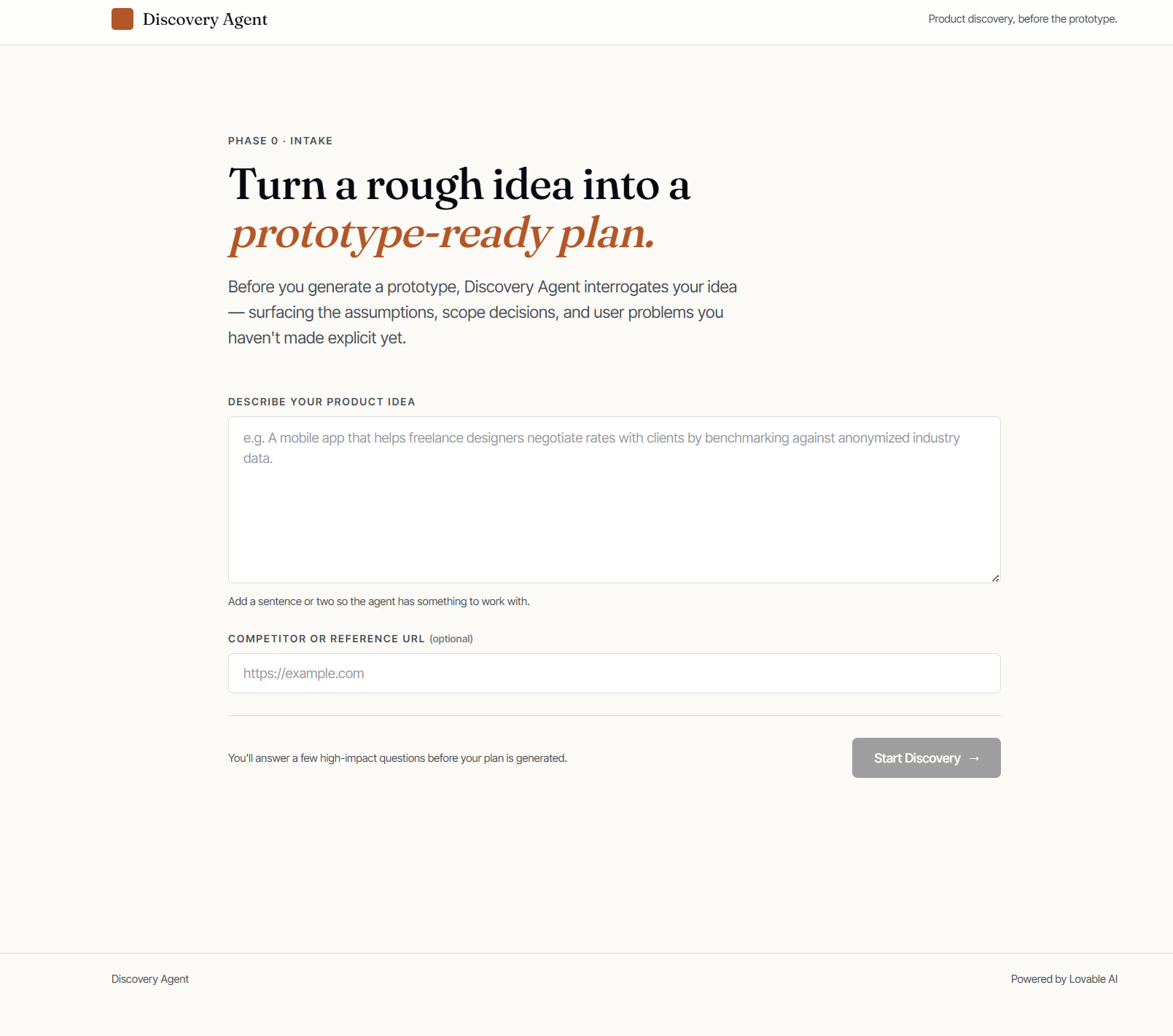
Review requests that route by rating. AI drafts only for customers who are already happy.

AI Role
AI drafts replies based on user ratings and selected keywords
Key Decision
Restricted draft replies only to 4 and 5 star ratings. Lower ratings route to staff recovery flow rather than auto-drafting public reviews
View repo ↗

Lead Engine

Experiment

Lead scoring built on free public data, with every score's reasoning shown.

AI Role
AI build partner (Cursor); no AI is used in the product scoring logic
Key Decision
Used free OpenStreetMap data as a default with opt-in Google Places API to manage running cost constraints
View repo ↗

Onam Sadhya Booking

Live Product

Festival catering bookings for Kayal Foods, from enquiry to kitchen prep list.

AI Role
AI build partner (Claude Code); no AI in product
Key Decision
Moved submission to after payment verification, so the kitchen only cooks for bookings that are actually paid
View live ↗ Admin view ↗

PrayTogether

No AI by Design

Prayer scheduling and audio PWA for a parish community, live and async.

AI Role
Excluded from product. Built with AI-assisted development (Cursor)
Key Decision
Deliberately excluded generated content from the product. User value comes from human presence and community connection
View repo ↗

PromptHunt

Experiment

One long, constrained prompt that turns "find me design jobs" into a verified list.

AI Role
The prompt is the product; directs models using 16 strict parameters
Key Decision
Reframed product as a portable, structured prompt rather than building a custom job aggregator site
View live ↗

Website Prompt Builder

Internal Tool

A prompt builder for Half Lemon Arts that questions you before it generates a site.

AI Role
Composes prompts with structured accessibility and design rules
Key Decision
Added a prompt-strength meter to block prompt exports until key design and WCAG criteria are answered
View live ↗

What these experiments changed in my practice

Twelve experiments in, here is what I keep coming back to.

01 / LESSON

AI output needs an accountability model.

If AI generates something consequential, someone needs to know who reviews it, who can override it and what happens when it is wrong. Automation nobody is accountable for is a risk, not a feature.

02 / LESSON

Explainability sometimes matters more than intelligence.

For scoring, calculations and high-stakes decisions, a simpler system people understand can be better than a more sophisticated model they cannot interrogate. Users must trust the logic to adopt the tool.

03 / LESSON

AI failure is a UX state.

OCR will misread. Models will hallucinate. APIs will fail. The interface needs confirmation, fallback and recovery paths designed from the beginning rather than added as a treatment for edge cases.

04 / LESSON

Privacy decisions happen before UI decisions.

What a system stores and sends shapes the product more than any screen does. On a personal AI product, that is an architecture decision you make early or regret later.

05 / LESSON

Building faster makes discovery more important, not less.

When a prototype takes hours, slow execution stops being the expensive mistake. Building the wrong thing quickly is. The judgment has to come before the generation.

I'm interested in the product decisions AI makes possible, not AI for its own sake.

I work across product strategy, UX, systems thinking and hands-on prototyping. AI lets me test ideas faster, but the work I care about is deciding what should be built, how it should behave, and where human judgment still matters.